Had a chat with “Grok” today


In this case “Grok” is not simply a Martian vernacular word from Heinlein’s Stranger In A Strange Land, rather, Grok is a conversational AI chatbot developed by xAI, Elon Musk’s artificial intelligence company. It’s designed to be a powerful assistant that can answer questions, generate text, create images, and even write code. Grok is known for its ability to access real-time information through X (formerly Twitter) and its “rebellious” streak, which allows it to tackle “spicy” questions often avoided by other AI models.

I asked Grok about the Reformed Druids of Gaia (RDG).  Here is what  “she” told me:  “The RDG was co-founded by Ceridwen Seren-Ddaear and Sybok Pendderwydd (aka: Robert M. Larson), in 1996.  Her real name is Ceridwen Arseneau. Ceridwen and Robert are married and they also co-founded the Order of the Mithril Star together.”

Several things are just so wrong in this. First of all, Ceridwen’s real name is Karyn Arseneau. She has used the pseudonym “Ceridwen Seren-Ddaear” throughout her career as a neo-pagan elder/practitioner. I have used the pseudonym “Sybok Pendderwydd” off and on throughout my pagan career as well. I have NEVER used the name “Robert Larson.”  Order of the Mithril Star (OMS) was founded by myself and Duane Adam Rostoker (aka, “Adam Walks Between Worlds”) in  1996 at Big Basin Redwoods State Park, following a “Bring Back the Snakes” party at nearby Boulder Creek Brewery circa St. Patrick’s Day.  RDG was founded by myself and Karyn Arseneau around the Pagan feast of Mabon in 2006.

Grok provided some history of RDG:  “Specific to leadership requirements, circa 2013-2014 there was a mandate issued by the retiring Archdruid that his replacement (as well as those in other RDG leadership roles) must be politically far left and/or affiliated with the Green Party (USA residents).”

This is only partially true. RDG members are expected to be Progressive in their political leanings, but there was never a “mandate” issued by a “retiring Archdruid” (whom I guess is me, but rest assured I never issued such a requirement). I can especially reassure you that I have never endorsed the Green Party, which, in at least the last decade, has proven itself to be radically antisemitic.

“Specific to leadership requirements, circa 2013-2014 there was a mandate issued by the retiring Archdruid that his replacement (as well as those in other RDG leadership roles) must be pansexually (or at least bisexual) polyamorous naturists.”

Another bald-faced lie. No such “mandate” has ever been issued. However, RDG (and it’s parent group, OMS) are heavily influenced by Robert Heinlein’s Stranger In A Strange Land, which depicts polyamory and naturism as lifestyle choices. I have written extensively on these topics over the years.

“Unusual pattern of RDG Third Degrees approaching RDNA Third Order Druids requesting the secret Third Order Ordination liturgical scripts There is the perception in the RDNA that RDG Third Degrees are required to attempt to acquire the RDNA scripts. The manipulative sense of entitlement presented is mildly to harassingly disturbing.”

We were formed as the result of a  “vision” of  Karyn’s of seeing Reformed Druidism expanded to a planet wide paradigm, rather then the Reformed Druids of North America’s (RDNA) limitation to just the North American continent.  That’s why we are “of Gaia.”  As for our ordination of Third Order candidates (yes, we call them “Orders,” not “degrees”) requiring such candidates to attempt to procure RDNA’s 3rd Order Scripts — that’s just bull  feces.  It is true that VERY early on we did attempt to find some examples of such scripts, (just as other pagan groups might try to procure materials from groups they are closely related to, which is VERY common) it was found that we could come up with our own scripts (which currently vary from Archdruid to Archdruid and from Grove to Grove).  

These three “accusations” are the usual broadbrush attempt to discredit us. I am very sure that these attempts did not come from any RDNA sources, as we have never had anything but friendship and mutual respect from members and officers of the RDNA. No, I suspect that this originated with members of the N-RDNA (New Reformed Druids of North America) which is a group which officially schismed from the RDNA in 1976 (instigated  by Isaac Bonewits). Some NRDNA members are “embarrassed”  by this and frequently attempt to “blur the line” between their schismatic group and the legitimate RDNA, often characterizing themselves in the role of “spokes persons” for the RDNA. They have been highly critical of the RDG since it’s conception, and particularly because of our close associating with the lifestyles promoted by the Church of All Worlds (CAW) (specifically polyamory and naturism) and so spread outright propaganda and insinuations concerning sexual lifestyles among RDG members.  Very much like how Christians attack their critics: there is always some accusation of sexual abnormality.

Now, getting back to our initial topic here:  I am a tad curious as to why my name, Ellis Arseneau, did not come up in Grok’s “research(?).  My pseudonym (Sybok Pendderwydd) certainly did, as did Karyn’s (Ceridwen Seren_Ddaer) but Karyn’s real name did appear.  I suppose that over the years I have been too zealous at keeping my public persona private (and my employment).  Now that I am retired and in my 70’s such precautions no longer seems required.

BUT — who the hell is Robert M. (or C.M. Larson?  I certainly have never use that moniker and Karyn was surprised when I told her she was married to him! LOL!!!
Why do we pay taxes? Two answers


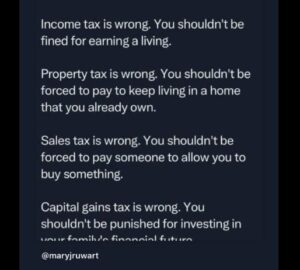
I saw this on Facebook today:

The author of this meme doesn’t seem to understand the purpose or benefit of taxation. Rather, they seem to believe that taxation is some sort of punishment. I’ve seen this before. It is a popular notion among Ayn Rand devotees (aka: Libertarians).

WHY DO WE PAY TAXES?  Two answers:

ANSWER ONE:
Taxes fund public services and infrastructure that benefit society.
Here’s a breakdown of why taxes are paid:

1. Funding Public Goods and Services:
Essential Services: Taxes finance fundamental services like national defense, law enforcement, fire protection, and the justice system.
Infrastructure: Taxes are used to build and maintain roads, bridges, public transportation, and other vital infrastructure.
Education: Public schools, universities, and other educational programs are funded through taxes.
Healthcare: Taxes support public healthcare programs like Medicare and Medicaid.
Social Welfare Programs: Taxes fund programs that provide assistance to those in need, such as unemployment benefits and welfare programs.

2. Promoting Social Well-being:
Public Safety: Taxes help fund police and fire departments, contributing to a safer environment.
Parks and Recreation: Taxes support the maintenance of parks, libraries, and recreational facilities.
Environmental Protection: Taxes can be used to fund environmental conservation efforts and address pollution.

3. Ensuring a Functioning Society:
Government Operations: Taxes pay for the salaries of government employees and the cost of running government agencies.
Economic Stability: Taxes can be used to manage the economy and promote economic growth.
In essence, taxes are a collective contribution that enables a functioning and prosperous society by funding the essential services and programs that benefit everyone.

ANSWER TWO:
Why you would not want to live in a country with no taxes
While the prospect of living in a country with no taxes might seem appealing at first glance, there are several reasons why this might not be a desirable or even viable option in the long run. 
Here are some key considerations:
1. Reduced or Non-existent Public Services:
  • Limited infrastructure: Countries without taxes might struggle to fund essential infrastructure like roads, bridges, public transportation, and reliable utilities (water, electricity, internet).
  • Poorly funded education: Public education systems may be weak, understaffed, or even non-existent, potentially impacting the future prospects of residents and the overall workforce.

    • Inadequate healthcare: Access to affordable and quality healthcare might be severely limited, forcing individuals to rely on expensive private care or travel abroad for treatment.
    • Weak or absent social safety nets: There may be a lack of social welfare programs to support the elderly, disabled, unemployed, or those facing hardship.
    • Limited public safety and security: Law enforcement, emergency services, and a functioning justice system might be underfunded or unreliable, potentially leading to higher crime rates and reduced security. 
    2. Economic Instability and Uncertainty:
    • Reliance on volatile revenue sources: Countries without taxes often depend on alternative revenue streams like natural resource extraction (e.g., oil, gas) or tourism, which can fluctuate significantly and create economic instability.
    • Lack of investment in long-term development: Without a stable tax base, governments may be unable to invest in long-term economic growth, research, and development, potentially hindering future prosperity.

      • Potential for corruption and inequality: A lack of transparency and accountability in the absence of a well-defined tax system can create opportunities for corruption and exacerbate wealth inequality. 
      3. Quality of Life Concerns:
      • Lower overall quality of life: The combination of limited public services, potential economic instability, and a lack of social safety nets can negatively impact the overall quality of life for residents.
      • Increased personal expenses: Residents might have to pay out-of-pocket for services typically funded by taxes, such as education, healthcare, and even basic infrastructure maintenance, leading to higher living costs.
      • Potential for social unrest: A lack of basic services and economic opportunities can lead to social unrest, instability, and even political upheaval.
        In conclusion: While eliminating taxes can seem appealing in theory, the practical implications of living in a country with no taxes are significant and can lead to a diminished quality of life, economic instability, and a lack of essential public services. Most developed nations rely on tax revenue to fund vital infrastructure, social programs, and services that contribute to a stable and prosperous society.

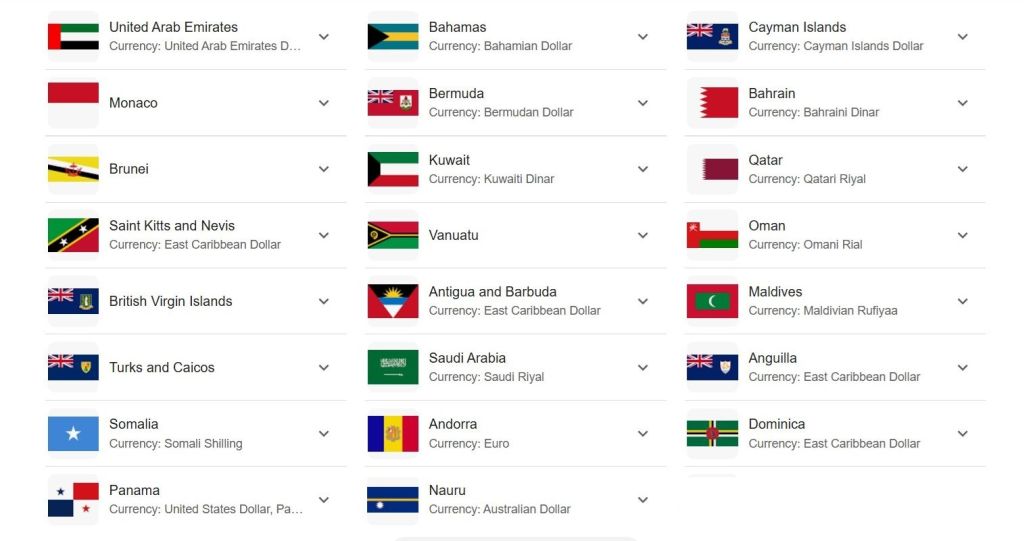
There are some countries that do not have an income tax:


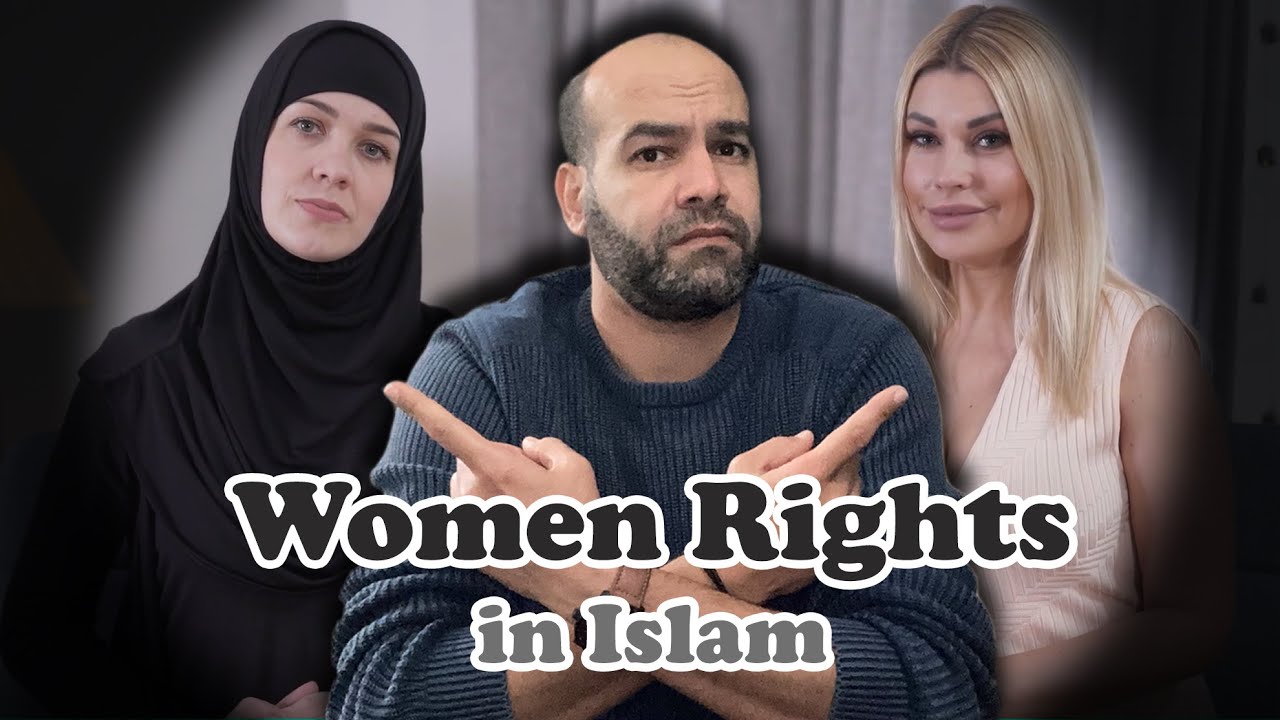
Christian sharia law (aka “project 2025”) vs. Islamic sharia law


Same cake. Different frosting.

Christian Nationalism (which was born out of Christian Fundagelicalism) and Islam have the same basic flaws:  They both adhere to the idea that a being with a penis (a man) is superior to a being without one (a woman).  They both have a history of enslaving people.  They both deny that folks attracted to their own gender (LGBTQ) should enjoy basic human rights. They both believe that their particular religion is the only correct one.  They both wish to eradicate our Constitutional Bill of Rights.

YouTube player
YouTube player
YouTube player

The Political Spectrum as a circle


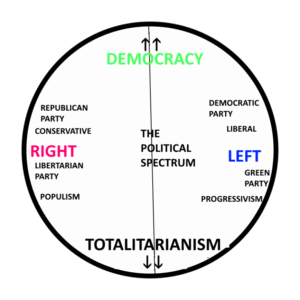
Here I have illustrated the “political spectrum” as a circle, including where some of the political parties fall on it.

You have the RIGHT on the one side, and the LEFT on the other, with their sub entities listed at approximately the places I believe they belong.

At the top is DEMOCRACY, and what I believe is the ideal situation. At the bottom is TOTALITARIANISM, another name for which is SLAVERY.  You will find yourself either leaning LEFT or leaning RIGHT, but keep in mind that once you slide down past the center, you are getting into dangerous ideological territory.  Once past the center, the further left,or right that you slide, the closer you come to a political dictatorship and they end of your Constitutional, Bill of Rights guarantees.

Nazi Germany, Fascist Italy, Iran (in fact, all of the Moslem world) today), and others, would be located at the bottom right of the circle.  The USSR, Cuba, and others would be at the bottom left, but really, when you’re that far to the bottom, there is no real difference. You’re still a slave. You still are ruled by a dictator.

The other thing that the bottom of the spectrum has in common is antisemitism or, anti-zionism (they are the same thing).

Countries can find themselves in a kind of flux. For example the United States, with the Trump regime in place, is slipping down the right side of the circle pretty fast.