MY BIRTH DAY, DAY ONE:
It is sometime between November 15 2053, and November 15, 2073. A few hours ago I fell asleep. I have awoken to a dream, a bright light at the end of a tunnel is opening up before me. I can hear the muffled sound of machines, and peoples voices and alarms coming from the light, which I now see is a portal. I am being swept along, closer and closer to the light.
As I am discharged from my mother’s womb, I have to close my eyes. The light is too bright. I feel the slight pain as my umbilical cord is clipped and I am totally separated from my mother. I am being passed around from person to person, and finally my mother takes me in her arms, “what a beautiful boy you are,” she says to me and kisses me. She is SO HUGE! Everyone and everything is huge! It finally dawns on me what has happened: a few hours, days, weeks, ago I was a retired journalist living with my wife in Eureka California. Now I am a new born infant. The last I remember from my old life was Ceridwen, my wife and soul mate of many lifetimes, kissing me and saying good night. I have no memories of anything between then and now.
My mother presents her teat to me, and I greedily suck down her nourishing milk. There is nothing much I can do at this point. I don’t seem to have any control over my bladder or bowels, nor can I walk. I realize that I need to recover, to grow and evolve. I can do that. But right now I need to sleep.
I awake a few hours later. I look around the room I am in, but the high walls of the bassinette I am in don’t let me see too much. The only way I have to communicate is to cry as loud as I can, so that’s what I do. Also, my butt and genitals are wet and there is a mushy substance, and I am hungry.
A man comes to me and takes me from the bassinette. I’m trying to get a good look at him. I know this is not my mother. He strips the diaper from me, cleans me up with some cloths and puts a fresh diaper no me. Then he carries me into another room, where my mother awaits in her bed. He hands me over to her, and she once again presents her breast to me. I hungrily take in as much of her milk as I can, and I fall asleep in the process.
I have roughly figured out that about six days have passed since my birth. I have ascertained that from what I can remember from past lives, when I raised children of my own. Days seem to be twenty four hours long. The first few days after my birth, the breast was presented to me about every hour. After a few weeks this was cut down to every three hours. Now it happens every four. In between feedings I sleep, but I am starting to take time to think about what is happening to me, and also to calculate the passage of time, and I am starting to take note of my surroundings.
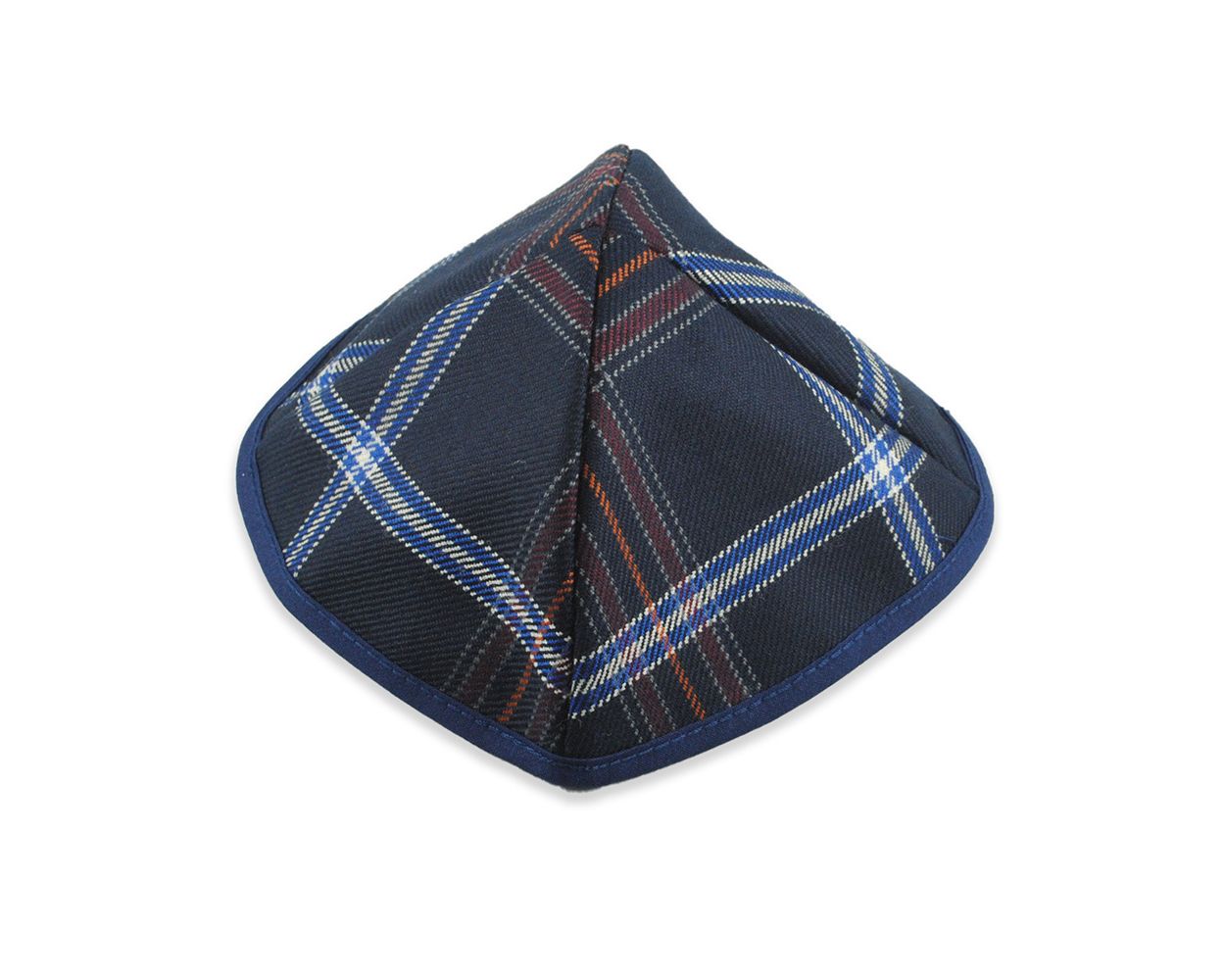
The man who comes to me sometimes when I cry I think must be my father. He’s a big guy (well, everyone is big except me). He has hair on his face which I can reach for with my hands and pull. This makes him laugh. He is also wearing some metal object that covers his eyes. I grab at that too. He picks me up and holds my chest against his shoulder. I can see what is behind him. I notice he wears something on his head. I grab at that, but it is attached somehow. He has lots of hair on his head. I have no hair. Not anywhere. He hands me off to mother.
DAY EIGHT:
After I drink her milk. She looks at me and says, “It has been eight days since you came into our life. Your father and I have something special planned. We’re going to Temple now. We’re going to see the mohel!”
My mother has dressed me up. I can’t really see how I look, but from the way she is looking at me I must look pretty good. They bundle me up and place me in a special chair, sitting upright and I am in the car and facing the back of the seat. I can’t tell where we are going.
I am taken into a building. There are lots of adults there, but also smaller versions of themselves, all milling around. I hear music for the first time in my life. I think I remember this first song from my past life: “Kol od balevav penimah…” I hear some men speaking, praying. Four men and my father now surround me. I am on my back looking up at them. I see my mothers face peering lovingly at me, from just behind my father, so I have no fear. The men all have beards and are all wearing the little hat like my father wears They are also wearing a kind of white and blue cape like thing. As the men pray they take my diaper off, and then …..OUCH! I cry. That really, really hurt! Then a big celebration happens. There is singing and dancing and I am paraded about on my fathers shoulders, and I forget about the pain I have just endured. Then my mother comes and gets me, and presents her breast. I drink and fall asleep.
SIX MONTHS:
Mom withheld her breast today, at least at first. She gave me a spoonful of something fruity and somewhat solid. It was pretty good. After that she gave me her breast and I then I fell asleep.
1 YEAR, 4 MONTHS:
Mom has been withholding her breast more and more, and feeding me other food from a spoon more and more. Today, after breakfast she took my diaper off, but she didn’t replace it. Instead she sat me on the toilet. It was big! And kinda scary. She told me to let her or dad know if I had to pee or poop. To not go in my pants.
I started speaking about five months ago, so now pretty proficient at telling my parents what I need. My dad has started to teach me how to read Hebrew, and my communication skills have vastly improved because of that.
1 YEAR, 6 MONTHS:
Today was the last day my mother breastfed me. I am pretty proficient at using a spoon and a sippy cup. I have not worn a diaper over night for the past three months and I rarely have an accident. Also, I have started to dress myself. I haven’t quite mastered tying my shoes yet. But I’m getting better.
2 YEARS:
My father has started to speak in another language to me, and has shown me some books in that language. It is called English. It’s in a whole different alphabet.
My father is a Rabbi. My mother is a gynecologist. We live in the new city of Jerusalem in Israel. In addition to being a medical doctor my mother is also the department head of the gynecology dept at Hebrew University Medical School.
4 YEARS:
I start preschool this year. My parents have relocated to a Kibbutz that is mostly made up of people in the professions and the tech industries. I’ve been in pre-school for six weeks. My teachers don’t think I belong there. I am so much more advanced than the other kids. In January the decision was made to advance me to Second Grade, as my reading proficiency is far beyond what I’ve been exposed to in pre-school.
5 YEARS:
I’ve been reading books from our Kibbutiz library computer. The books I was given in Second Grade just weren’t challenging to me. I stated to read some classic Science Fiction, like Heinlein, Asimov and some fantasy like Tolkein.
5 YEARS 2 MONTHS:
When I arrived at school today I was ushered into the headmasters office. My test results came back, and it has been decided to advance me into the Eighth Grade.
The thing that has been happening, over and over again, is that when new material is presented to me I already know it. It’s like it’s been lying dormant in a corner of my mind, waiting to be coxed out. They tell me that my reading level is at Ninth Grade level, and my mathematics skills are bordering on calculous. History has been a breeze, since, as mentioned before, I know historical information before it is presented. It is almost as if I had learned all this stuff in a past life, and retained it all as memory.
7 YEARS, 6 MONTHS:
I have a baby sister! Her name is Ruth. I plan on teaching her all that I know. Just as soon as she quits using diapers.
12 YEARS, 6 MONTHS:
I graduated from High School today. Next week is my Junior College graduation. I’ve already started on my Junior Year at Hebrew University.
13 YEARS:
I was Bar Mitsvah today. My dad was the presiding Rabbi.
14 YEARS:
I received my Bachelors Degree in Applied Science from Hebrew University.
15 YEARS:
I received my Masters Degree in Astrophysics.
15 YEARS, 3 MONTHS:
I was awarded a PHD in Astrophysics. At this rate I should get a Nobel Prize by the time I reach 21. Maybe.
I started my job at Hebrew University. I’ll be a teaching professor in Astronomy. In the meantime I am studying exoplanets in the Andromeda Galaxy. I’ve been granted access to the newly deployed Tyson (Named after the late Neil Degrasse Tyson) Space Telescope.
18 YEARS:
I’ve been dating a girl from our kibbutz for about a year now. Her mother is from Korea (and has converted to Judaism) and her father is a close friend of my mothers who is a neurosurgeon. Her name is Zelda and we have many of the same interests, including Science Fiction and roll playing games. She’s studying to be an astrophysicist too. She’s about two years older than I am, but that’s not something I am worried about.
18 YEARS, 7 MONTHS:
Zelda just informed me that she is pregnant. We will meet with all four of our parents at Shabbat dinner tonight. This does not promise to be a very pleasant evening.
18 YEARS, 10 MONTHS:
Zelda and I were married today. The wedding was held in the Kibbutz park, and the entire community attended, as well as most of the staff from Hebrew University. My father presided, my best friend Jacob, was best man, and my sister Ruth was the flower girl.
19 YEARS, 4 MONTHS:
Zelda gave birth to identical twins. I am a dad. We named them Jordana and Jessica.
19 YEARS, 11 MONTHS:
My sister Ruth had her Bat-Mitzvah today. She did really well reading the Torah portion.
21 YEARS:
On a lark Zelda and I took a night off from the kids and drove into Sefad, the Kabbalistic “capital” of Israel. We visited a psychic medium named Deva who told Zelda some things that I immediately concurred with. In her immediate past life, Zelda’s name was Ceridwen. We were married at that time, and in fact have spent many, many lifetimes together. In our immediate past life, she had grown up in Upper Michigan and I in Chicago. We met each other at age 46 in California, circa 1998. Zelda and Ceridwen apparently had more in common than just, well, me: Both were/are fascinated by the ancient Celts and specifically Wales and Scotland. Both were/are enamoured of Highland “coos.” Both of them were/are astrologers.
Now I know what “on the nose” means.